May 12, 2026 The federal government and TELUS have announced plans for three large-scale artificial intelligence data centres in British Columbia as part of a push to expand Canada’s sovereign AI infrastructure. Artificial intelligence minister Evan Solomon said the government recognizes the financial and policy risks involved but believes Canada must take “bold” steps to remain globally competitive in AI.
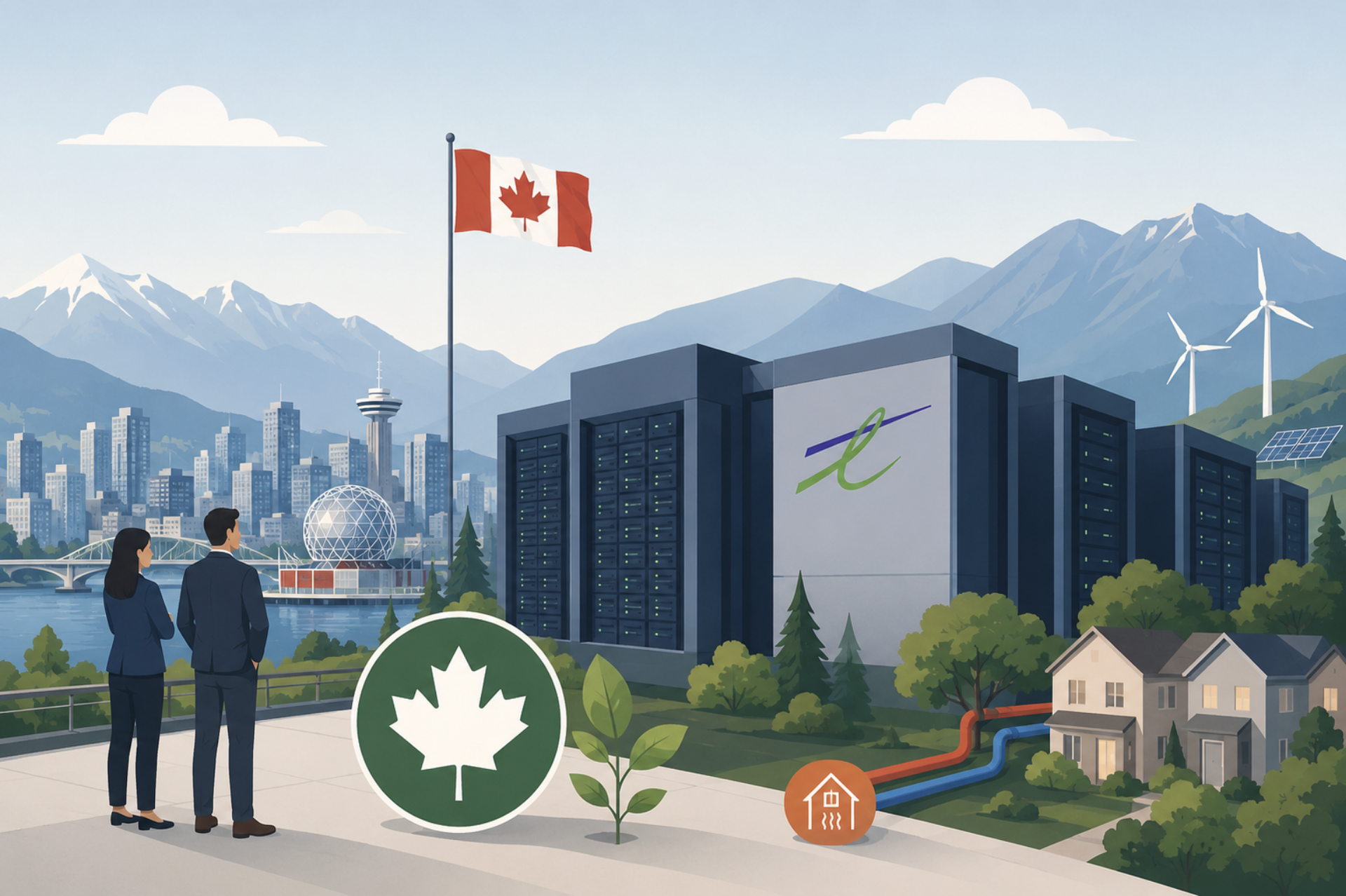
The project, unveiled Monday in Vancouver, includes two facilities in Vancouver and an expansion of an existing data centre in Kamloops. TELUS described the initiative as an effort to build “one of the world’s most powerful and sustainable AI infrastructure clusters,” designed to support both academic research and commercial AI development on Canadian soil.
“We shouldn’t sugar-coat it. Of course there’s financial risks when people are investing billions of dollars,” Solomon said during the announcement.
“Building is risk, which is why the Prime Minister said we cannot be risk averse in this moment,” he added. “We’re going to take on an element of risk, but you also have to do that boldly and responsibly.”
The federal government has not released detailed cost estimates for the project. However, Ottawa previously committed $2 billion over five years beginning in 2024–25 under its initiative to support large-scale sovereign AI data centres in Canada.
The announcement follows a federal call for proposals earlier this year aimed at identifying major domestic AI compute projects. Governments globally are racing to secure computing infrastructure as demand for AI processing power accelerates across industries.
TELUS said the Kamloops expansion and a new facility in Vancouver’s Mount Pleasant neighbourhood are expected to open later this year, while a third downtown Vancouver facility is planned for 2029.
Outgoing TELUS CEO Darren Entwistle called the project a “seminal announcement” for Canada’s economic future.
“To do a comparative to understand the magnitude of what is being achieved here, this is enough processing power to run the world’s most advanced AI models,” Entwistle said.
“And every single computation will happen right here on Canadian soil, with infrastructure that is owned and infrastructure that it’s controlled by Canadians.”
The federal government has increasingly framed domestic AI infrastructure as both an economic and strategic priority. Officials say Canada’s geography, cooler climate, renewable energy access and existing telecommunications infrastructure position the country well for large-scale AI investments.
TELUS said more than 98 per cent of the electricity powering the facilities will come from renewable energy sources. The company also said waste heat generated from the Vancouver sites will be redirected to help heat nearby homes.
The project arrives as concerns about AI safety and oversight continue to grow in Canada. Artificial intelligence systems came under renewed scrutiny earlier this year following the mass shootings in Tumbler Ridge, where authorities said the shooter had troubling interactions with ChatGPT that were flagged internally by OpenAI but not reported to law enforcement.
Solomon declined to directly connect those events to the new data centre initiative but confirmed the government is continuing to examine AI safety protocols.
“We are building sovereign AI under Canadian law, but we are still going to have Canadians use technologies from around the world, including things like ChatGPT,” Solomon said.
“Sovereignty is not solitude, but we have an obligation to protect Canadians, to protect children, and that means making sure it’s safe, reliable, transparent, and subject to Canadian law.”
The announcement also drew criticism from federal Conservatives, who argued the government should focus less on direct involvement and more on reducing regulatory barriers for private investment.
Ben Lobb described the project as unnecessary government intervention.
“Canada should already be a hub for AI data centres,” Lobb said in a statement. “They don’t need government involvement or tax dollars, they just need the Liberal government to get out of the way.”